Clinical Breakthroughs and Comprehensive Rehabilitation Lead to a Childhood of Hope for Aries
At 7 months of age, Aries' mother, Priscilla, noticed that her son was unable to sit up independently. During pediatric check-ups, she was reassured that every child develops differently. However, by his first birthday, Aries was still unable to sit independently and was beginning to show signs of low muscle tone.
In February 2025, Priscilla sought a second opinion for her son and was referred to NewYork-Presbyterian Morgan Stanley Children's Hospital (CHONY), where he was admitted and underwent a comprehensive evaluation, including genetic testing. Bloodwork revealed markers of muscle deterioration, while his oxygen levels were low. Aries spent a month at CHONY before being transferred to Blythedale Children's Hospital in March for comprehensive rehabilitation and respiratory support. At the time, Aries relied on BiPAP and was struggling to breathe independently.
The team at Blythedale began working with Aries immediately.
"Aries was medically very complex," said Katie Fraine, OTR/L, occupational therapist at Blythedale. "When he came here, he had some skills. And then we saw a rapid decline in those skills while he was here."
The results of Aries’ genetic testing, which came back in March, confirmed a diagnosis of thymidine kinase 2 (TK2) deficiency, a rare mitochondrial disorder associated with muscle weakness, chronic respiratory failure, and developmental delays.
Left untreated, the disease would continue to progress, impairing Aries’ ability to perform basic functions such as swallowing or moving his arms and legs. For children with infantile-onset TK2 deficiency, the typical prognosis is poor. Most children with this diagnosis survive just one or two years and ultimately succumb to respiratory failure and death.
For Priscilla, the diagnosis was devastating.
"I was brought to a place of true surrender," she said.
As his respiratory condition worsened, Aries was urgently transferred for placement of a tracheostomy and gastrostomy tube to help him breathe and receive nutrition.
When he returned to Blythedale, M. Susan LaTuga, MD, MPH, pediatric neonatologist, noted the significant weakness throughout his body.
"It was hard to see him when he came back with the tracheostomy," Dr. LaTuga recalled. "His eyes were alive and awake, but he couldn't move his muscles."
TK2 deficiency affects fewer than 2 per 1 million people worldwide. In her search for options, Priscilla learned about an experimental drug for this condition being developed by Michio Hirano, MD, at Columbia University Irving Medical Center. Under the guidance of Aries’ pediatric neurologist Valentina Emmanuele, MD, PhD, also at Columbia, and Dr. Hirano, Aries was able to start the medication through a compassionate use program in April 2025.

The medication is a powder made from doxecitine and doxribtimine. It provides the building blocks needed to restore mitochondrial DNA, which is depleted in patients with TK2 deficiency.
As Aries' muscles began to rebuild, he participated in daily occupational, physical, speech, and feeding therapies at Blythedale. Throughout his rehabilitation, he was also gradually weaned from several medications.
Within a few months, Aries began to show meaningful progress.

"We worked very slowly with him at first," said Amanda Walters, therapeutic recreation assistant at Blythedale. "We would start with sitting up for five minutes at a time, then resting, and then getting back up again to try a cause-and-effect toy or a light-up toy that he liked to hold. We focused on helping him tolerate a little bit more each time."
Today, Aries can identify the first letter of his name, turn the pages of a book, recognize letters and fruits, and point to animals while correctly naming them.
In November 2025, the medication, Kygevvi, received full U.S. Food and Drug Administration approval. The treatment was shown to reduce mortality by nearly 90% in patients with onset of weakness at or before age 12 years.
By July 2026, Aries had made sufficient progress in weaning from the ventilator to undergo decannulation and no longer required a tracheostomy. He continues to make gains in sitting, walking, and talking. Although he still uses a gastrostomy tube to supplement feedings, he is steadily progressing toward feeding independently.
"At Blythedale, we really help children regain their skills," Fraine reflected. "But it's not just about regaining milestones. It's about helping them regain a sense of childhood and participate meaningfully in it. Being part of that journey was incredible."
In August, Aries was discharged home with his family.
Additional Stories
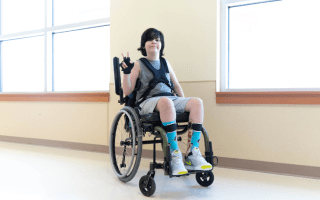
Magnus' Comeback from Transverse Myelitis
On a Friday afternoon in January, 10-year-old Magnus was playing with his younger brothers on a local playground. That evening, he complained of back pain. "By Sunday night, he had lost all mobility," said Pam, his mom. Magnus was rushed to Cohen Children's Medical Center, where he was diagnosed...

From Extreme Prematurity to Remarkable Progress: Alexander's Story
Born at just 24 weeks, Alexander faced extraordinary, life-threatening challenges from his first moments. He required resuscitation at birth and was placed on CPAP, a form of breathing support, in the delivery room. In the NICU, he was diagnosed with chronic lung disease (bronchopulmonary dysplasia)...
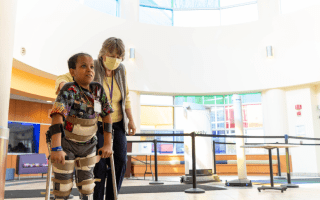
Ten-year-old Anthony was born with spina bifida, a congenital condition that affects his spinal cord, leaving him without sensation or mobility below the lumbar vertebrae and unable to walk independently. Just before his third birthday, Anthony began receiving care at Blythedale Children's Hospital...